Thursday, February 9, 2017

Super Gecko

Super Gecko- Geckolepis megalepis can shed its skin and scales with ease
A new species of gecko called Geckolepis megalepis has been discovered in Madagascar. This species is unlike any other. For starters, its massive scales are the largest found among any known gecko species. What truly separates these geckos from all others is their efficient ability in shedding their scales. The Geckolepis megalepis belongs to a group of geckos called fish-scale geckos. Fish-scale geckos have unique scales that are attached loosely to their skin. The skin layer underneath the scales rips easily and regenerates in a matter of weeks. Their scale morphology and their unusual skin allows them to shed their scales when they are gripped tightly. This comes in handy in life-threatening situations. All that the predators are left with is an unsatisfying wad of skin and scales. Unlike other fish-skin geckos, Geckolepis megalepis can shed their scales at the faintest of touches. This is most likely due to their large scales. Repeatedly growing such massive scales is a large metabolic risk but the benefit of escaping predators outweighs it. Talk about taking evasive maneuvers to another level.
Their unique morphology makes it a challenge for them to be captured and studied by scientists. Studying them could lead to breakthroughs in medical research if the processes behind how their skin regenerates with no scarring is discovered. From this knowledge, new techniques could be devised to lessen or even eliminate scarring during skin repair in humans.


Posted by: Leah DeLorenzo (1)


Source of Articles and Pictures: http://www.livescience.com/57786-new-gecko-species-disposable-skin.html
https://www.sciencedaily.com/releases/2017/02/170207092733.htm


Wednesday, February 8, 2017

Future of Spider-Man

Image result for human muscle
Future of Spider-Man


Could you imagine being Spider-Man for just a second? Swinging from building to building and shooting spider webs from your hands would just be living life on a whole new level. However, this may not be possible yet, but artificial muscle is now being experimentally made with spider silk. The reason behind this is because of it's stunning qualities that are much similar to our muscles. Also, with spider silk muscles, our bodies would be much more efficient at what they do.


According to Science daily's recent article from American Institute of Physics, the Ornithoctonus Huwena spider can be bred artificially for their silk. The property of the silk that makes it so key to resembling our human muscles is it's shrink-stretch ability. The silk is specifically triggered by water as it has a strong affinity for it. The protein structure of the silk down to the alpha-helices and beta-sheets give the silk it's strength and elasticity qualities. Although this system sounds very simplistic in the sense that using water causes the silk to stretch, and taking the water away from the silk causes it to shrink, there is a much larger mechanism taking place. The study being conducted is how the silk interacts with the water and applying these mechanisms to the development perhaps in artificial muscle or devices.


Although scaling walls and gliding across buildings would be cool, we are far ways from that. The spider silk is still currently under study as scientists have only started looking into this specific strand of silk from the spider to observe human-like muscle qualities. Development of a product or utilizing the spider silk within the human body has not yet been done, but scientists do know what triggers the spider's silk to stretch and retract to behave like our very own muscles. Perhaps future technological advances will allow for the spider silk to be used as a device or even to create artificial muscles for our human body.


Posted by Andrew Do (1)


Am I Dreaming?

Have you ever heard of sleep paralysis? Maybe you or someone you know has experienced this condition once in their lifetime. The feeling is not something exciting or even relaxing, rather, something pretty scary. Imagine finally drifting into sleep after a long day of work when, suddenly, you wake up unable to move or even speak. No, this is not a nightmare, it actually happens in real life.  Over centuries, symptoms of sleep paralysis are described as heavy sensations on the chest, floating outside of ones body and even accompanied by hallucinations or a being attacked by a “demon like-figure”.  Luckily, this only lasts for about a few seconds to a minute; however, I definitely would not want to be woken up by this!

Sleep paralysis occurs mainly due to sleep deprivation, being jet lagged or even simply napping during the day. So, what actually is going on in our bodies that are causing this? Well, to be brief, sleep paralysis happens when you are awake during the stage of sleeping, called rapid eye movement (REM). During REM, the dorsolateral prefrontal cortex (a part of the front brain), which correlates to the ability of planning, memory, and thinking, is turned off. This, then, causes your muscles to relax and vivid dreaming starts to follow. During sleep paralysis, the body remains paralyzed in REM while the brain awakes and the eyes start to open. At this point, you are in a conscious state but are unable to move voluntary muscles or speak. Thus, sleep paralysis occurs when the body has trouble making the transition between REM sleep and wakefulness.


The most interesting thing is that people tend to, but not always, experience hallucinations which could be extremely terrifying to say the least. When fear is escalated during sleep paralysis, you are more likely to try to move causing even more tense hallucinations, and could even convince yourself that there is a supernatural entity in the room with you. If you want to check out a more in depth explanation on why people see these demon-like figures, UC San Diego neuroscientist did a study to try to answer some unknown questions about it. Now, before you freak out about going to bed tonight, there is really no clear cause to sleep paralysis, therefore, you really cant prepare yourself for it until it actually happens!  Goodnight! Sleep tight!

Murderer in the Making: A Tale of Sea Otters


Murderer in the Making: A Tale of Sea Otters

               Sea otters are cute, right? Maybe now they are, but it wasn’t always that way. In 2010, researchers found the complete skull of what they are calling a “wolf-sized otter.” The average otter size today is anywhere from 7-26 pounds depending on the species. The wolf sized ancient otter has been projected (based on skull size) to be as much as 4 times the size of that which is astonishing. It is said to have weighed an average of about 110 pounds. Following up on their research from 2010, in 2015, these researchers found more fossils belonging to the same species of otter. These fossils included lower jaw bones, teeth, and several limb bones. The images show that the teeth and lower jaws are much bigger than your typical otter, in fact they resemble the teeth of a badger. Can you imagine coming face to face with this ancient beast? Researchers don’t know why these otters were so large. Maybe it was due to ancient otters eating larger prey? Although unlikely, it is certainly a possibility. The most probable reason that the researchers have come up with is that these ancient otters were mollusk eaters. Their powerful skull and jaws were most likely used to crack through tough shells of clams. With that being said, I advise you not to worry too much about potential aggressive behavior from today’s modern otters seeing as their large predacious ancestors weren’t so terrifying after all.

Posted by Nicolas Baltayan (Week 1)

Thursday, April 28, 2016

Got Gas?

Farting is a way of life - literally speaking. It is an essential aspect shared by all species . The technical term for fart is flateuis. Humans fart as a result of our digestive system. When food is ingested, we also take in air. That same air needs to be released from our system. in addition, when the food is being further broken down in the small intestine for nutrient uptake, the elements that are unable to be digested are further broken down by bacteria that inhabit the large intestine and colon. The bacteria carry out fermentation, and the byproducts released are hydrogen sulfide, oxygen, nitrogen, hydrogen, and methane gas. These elements compose gas, which is otherwise known as flatus.


The rate at which one passes gas highly depends on the person’s diet. The more carbohydrates one intakes, the more likely they are to pass gas given that elements such as sugars, fibers, and starches cannot be fully broken down in the small intestine alone. Eating foods such as beans, wheat, and even drinking soda can make you fart more than usual. Now what gives a fart its funky smell is the hydrogen sulfide. The richer your food is in sulfur, the smellier your fart will be. The smell of your gas can also be indicative of other health concerns; if the smell is always bad, it can be a sign of an infection. But keep in mind that the state of your stool also changes, so do not be too paranoid. So please, keep in mind the food that you do eat before heading out in order to spare those that are around you.


Post by: Soffie Jobarteh

Sperm Facial Anyone?

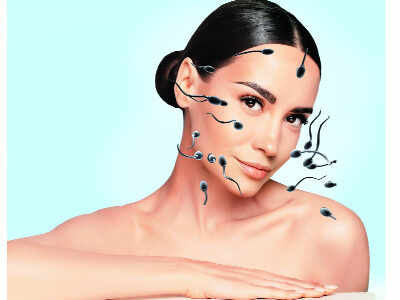
Have you ever once sat down to think about the benefits that come with sperm besides procreation? Generally speaking, I am sure that curiosity has gotten the best of people once they are behind closed doors given the existence of various kinks and fetishes. Curiosity got the best of me as well, however, it was for a different reason. I wanted to know if there were health and beauty benefits when it came to semen; weird, I know, nonetheless, after reading and hearing various stories I just wanted to increase and expand my knowledge on semen and how it can be utilized to benefit people in other ways.

“Extraordinary Things You Can Do with Sperm,” by Nikki Tucker, is an article that informs people on the properties and benefits of semen. Semen contains spermine, an antioxidant that is used to not only help rejuvenate the skin, but also help to prevent acne and wrinkles. In addition, it has been confirmed that semen can be served as an antidepressant. Semen is composed of prolactin, oxytocin, and serotonin, which are chemicals and neurotransmitters that assist and facilitate in boosting the mood of an individual. In addition to facials, one can use semen as an ingredient in their next home cooked meal, if and only if he and or she is that daring; “semen is very nutritious” you know! And on top of that, semen can be used as an alternative for invisible ink. 
So if you think that sperm is for one thing, and one thing only, think again my friend. Sperm comes with many benefits: from beauty and health benefits, to it being utilized in the kitchen. Thank me later!


Post by Soffie Jobarteh

Wednesday, April 27, 2016

The Promise of Poop

  Soon after Max Nieuwdorp started his residency at the internal medicine department of the Academic Medical Center (AMC) in Amsterdam on 2006, he was confronted with a sad case: an 81-year-old woman hospitalized for a complication after a urinary tract infection who seemed unlikely to survive. She had bed sores and high fevers and was unable to eat. After antibiotics had wiped out her colon's microbial population, an opportunistic bacterium called Clostridium difficile had taken over, causing terrible diarrhea and bowel inflammation.

C. difficile is a notorious pathogen that kills at least 14,000 patients a year in the United States alone.It is a major cause of antibiotic inducing diarrhea To treat it, the woman was given several courses of vancomycin, the standard antibiotic in such cases. But, as often happens, the bacteria had become resistant.
 "I want to try a fecal transplant” Nieuwdorp said.

The plan was simple: The duo would flush the contents from the woman's colon, including, hopefully, the C. difficilepopulation, and replace it with the healthy bacterial flora from a donor, in this case her son. To do so, they would mix the son's feces with saline in a blender and squirt it straight into the patient's duodenum, the upper part of her intestine, via a thin plastic tube inserted through her nose.
Three days after her treatment, the woman left the hospital—walking.

Many doctors now agree that intestinal C. difficile infections can be cured by transplanting stools from healthy people. Researchers also think that a wholesale replacement of the gut's microbial flora might help treat many other diseases, such as inflammatory bowel disease, diabetes, and the elusive chronic fatigue syndrome. 

Posted by: Mohammed Saleh


              http://www.nature.com/nature/journal/v517/n7533/full/nature13828.html