Wednesday, April 6, 2016

Butterflies in your Stomach?

--> -->
Almost everyone has encountered a situation that has given that uncomfortable or fluttery feeling in the stomach, whether it’d be during a first date or a big presentation. All of us commonly refer this feeling to the un-scientific name of having the “butterflies.” So why are we able to feel such a sensation in our stomachs?
What really is going on, is that you are experiencing stress.  Stomach butterflies are related to the body’s “fight- or- flight” response, which is the brain sensing a potential threat to survival. Signals from the brain are sent to the hypothalamus and pituitary glands, that both control our bodily functions Once the signal reaches the pituitary gland, adrenaline is immediately released into the blood stream. The autonomic nervous system sends a rush of this blood mainly to the brain and muscles rather than to organs that are “farther away” or non-essential (during the moment) such as the stomach. The reduction of blood flow may be the cause for the fluttery sensation in that area of the body.
http://www.mytimemanagement.com/images/fight_or_flight.jpgSo the next time you are taking a test or about to speak in front of a large crowd, just think that it is your body’s “fight- or- flight” response that is making your heart beat faster, mouth feel drier and hands being damper and shaky. It is normal, just don’t forget to take a deep breath. 


Sarah Ona (Group 3)
-->  
http://greatist.com/happiness/why-do-i-get-butterflies-my-stomach


Overpopulation


Human overpopulation is one of the most pressing environmental issues around the world. Overpopulation is a condition where the number of existing human populations exceeds the carrying capacity of the earth. Each year the human population continues to increase at a rapid pace. This is caused by a number of different factors. The biggest cause of overpopulation is due to the lack of family planning. Many developing nations have large numbers of people who are illiterate, live below the poverty line, and have little or no knowledge about family planning. The number of teen pregnancies have increased throughout the years which has created an increase in birthrate. In order to stabilize the growth of the human population, the birthrate needs to equal the death rate. Over the years, the birthrate has increased and the death rate has decreased.


Overpopulation is causing major problems around the world. One of the biggest issues is the depletion of natural resources. The Earth is only able to produce a certain amount of food and water. The human population is continuing to grow but the natural resources are not. The more people there are the less resources there will be and eventually the Earth will not be able to produce enough for everyone. Over the last 50 years there has been an increase in environmental damage. People are cutting down forests, hunting wildlife in a reckless manner, and creating pollutions. Overpopulation has also caused a rise in unemployment. The more people there are the less available jobs there will be. Rise in unemployment causes a rise in crime rates. People will steal various items to feed their families and provide them with the basic amenities of life.

There's a number of things people can do to help make a difference. A better education on the topic can help make people aware of the problems that overpopulation is creating. If more people are aware of the dangers that overpopulation has caused then they can help to preserve natural resources so the Earth does not eventually run out. There needs to be an increase in the knowledge of sex education. If more teenagers are educated on these issues then hopefully it can help prevent any unwanted pregnancies. In order to save the Earth and the environment from overpopulation, people need to become more aware of the dangers it is causing and the birthrate needs to decrease.


http://www.conserve-energy-future.com/causes-effects-solutions-of-overpopulation.php
http://www.everythingconnects.org/overpopulation-effects.html


Rebecca Thomas (3)

Hacking Reached A New Level


        Imagine if DNA was the same as circuits in our computers, where we could come up with a code to perform the functions we want easily, and then implement them into the structures that needed them. According to an MIT professor, they have done just that! A programming language dedicated to forming DNA sequences can be used to reprogram cells to have specific functions. While still early, this could have many different applications. 

       Just like programming a computer, a text language has been formed that can create biological circuits in cells to have them act in specific ways. Currently, only simple functions have been created. These include sensing temperature and light, as well as other environmental levels. This program allows the quick creation of these functions in order for them to be tested quicker and their effects studied.

      If this research continues, eventually researchers could develop specific bacteria with functions that help a host organism. For example, scientists could create bacteria that break down lactose, in order to help those who are lactose intolerant. Other bacteria could be created to live in host organisms and protect them, such as in plants. In plants, these cells could be programmed to release insecticides in response to the plant being eaten. This is just a start, so there is no telling what amazing creations could come from this.

- Chris Richard

http://news.discovery.com/tech/biotechnology/code-written-to-hack-living-cells-160401.htm

The Zebrafish

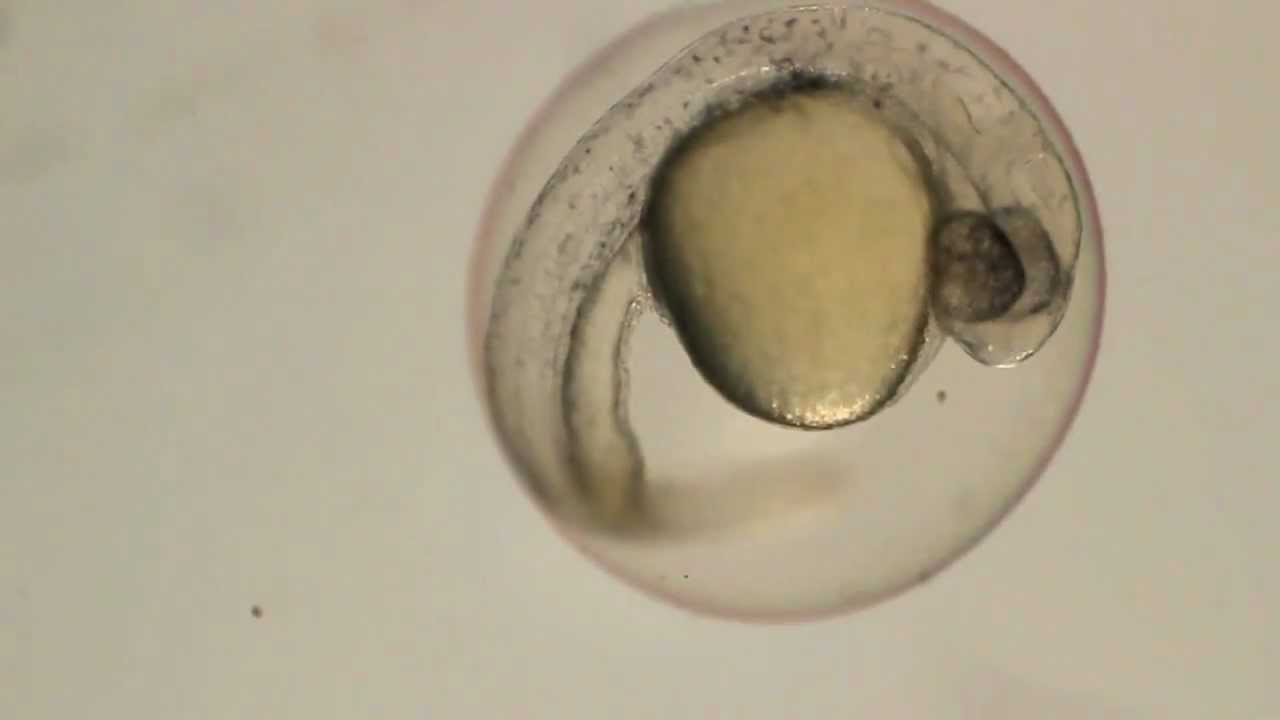
The zebrafish, also called “Danio rerio” is a tropical freshwater fish known for its usefulness in scientific research as a vertebrate model organism. It is called zebra because of five uniform, pigmented, horizontal, blue stripes on the side of the body, which are reminiscent of a zebra’s stripes.
Zebrafish are used in lab because they are easy to keep and breed in the lab. They produce large numbers of fertilized eggs on a regular basis (a single female can produce up to 500 eggs each week). Their embryos develop rapidly with precursors to all major organs appearing within 36 hours of fertilization. Its genome is sequenced and easy to manipulate using reverse genetics tools and insertion of transgenes. What is also useful about zebrafish is that its chorion, or egg shell, is clear, which means that developmental processes can be clearly observed under a simple light microscope. 
Zebrafish have been used to make several transgenic models of cancer, including melanoma, and leukemia. They also have been used to model cardiovascular diseases including heart diseases.

We appreciate the use of model organisms such as zebrafish, yeast and drosophila in medical research and the knowledge that they give to scientist. 
Hopefully with more research and studies, many diseases will be cured.

Mohammed Saleh

Sources: Dr. Craig Albertson slides
              -Wikipedia

Sunday, April 3, 2016

White-Nose Syndrome and the Threat to America's Bat Population

Last March, a veterinarian in Washington state made an alarming discovery while examining a dead bat. The animal showed clear signs of white-nose syndrome, a deadly disease which has killed upwards of 7 million bats in the eastern United States. The illness, which is caused by the fungus  Pseudogymnoascus destructans, had never been detected in bats on the west coast, and the recent discovery in Washington has scientists scrambling for answers. White-nose syndrome affects bats during hibernation and causes severe damage to tissues and causes physiological problems often leading the death of the infected animal. In the past ten years, it has been detected in bat populations in 28 states and Canada. Scientists had originally believed the fungus was restricted to the eastern part of the country, however the discovery in Washington has demonstrated that efforts to contain the disease have not been effective. In an effort to prevent the spread of the fungus, officials put regulations in place to keep fungal spores out of caves and away from healthy bat populations. The discovery of white-nose syndrome in the western United States has presented officials with not only a mystery to solve, but also a serious issue that must be addressed immediately. Scientists are now working to sequence the genome of the Washington fungus in order to compare it to the genome of the eastern Pseudogymnoascus destructans. The goal is to determine how the fungus managed to travel across the country and infect healthy bat populations in the west. Immediate steps must also be taken to determine the extent of damage to Washington bat populations in an effort to prevent further spreading of the fungus. If Pseudogymnoascus destructans continues to spread across the United States and unless scientists are able to quickly identify a solution, there is high potential for catastrophic damage to the North American bat population.

Bradley Sarasin (Group 3)

Source: NH Voice

Wednesday, March 30, 2016

Taking a look inside with Veterinary Medicine

Veterinary and engineering researches at the University of Saskatchewan have come together to create an imagining technology to further understand the unknown of the gut of a horse. A veterinary researcher Dr. Julia Montgomery, equine surgeon Dr. Joe Bracamonte and specialist in health informatics and imaging Khan Wahid teamed up and created and tested an endoscopy  capsule, the size of a typical vitamin, to view the inside of a horse.

Before this research there were no other ways to view the small intestine besides exploratory surgery or a laparoscopy. A laparoscopy is a small tube with a light that gets inserted through an incision. Neither of these options gives the view from inside of the intestine. 

This new capsule is a powerful innovation that can be used to diagnose diseases such as cancer, inflammatory bowel disease and to check surgical sites. This can determine and prove what is normal of the small intestine.

This capsule is not new in the technology with humans but is very new to the equine health world. The capsule is inserted through a stomach tube into the horses stomach. The capsule then sits in the stomach for eight hours streaming a constant picture. 
With new technology we can make major advances in equine medicine and help many horses. 


-Emily Mueller (Group 2) 

Fetal Alcohol Syndrome

            Fetal Alcohol Syndrome is the most leading known preventable cause of development and physical birth defects in the United States.  Each year in the United States, one in every seven hundred and fifty infants are born with F.A.S.
Some physical defects these children are born with are low birth weight, small head circumference, smaller eye openings, and flattened cheekbones.  These features stay with the child for the rest of their life.  In fact, the child’s mental defects intensify as the child grows into an adult.  These mental problems such as health problems, troubles with the law and being independent, poor memory, development delay, behavioral problems and poor motor skills, all exponentially tend to get worse as the child grows.
            It is well known for a pregnant woman not to consume too much alcohol when carrying a baby, but how does one know how much is too much?  Unfortunately, there is no evidence that can determine how much alcohol can be taken in throughout the whole nine months.  The reason for that is all women process alcohol differently, depending on age, if she had anything to eat or how often they drink.
            Drinking during the first trimester has the worst effects on the child’s development growth and is more likely to develop Fetal Alcohol Syndrome.  This is because the brain in the fetus is just starting to develop and with alcohol is present it makes it more difficult for everything to go smoothly. But overall, Fetal Alcohol Syndrome in infants is a very preventable disorder.  It is always a healthy and smart decision to stay away from alcohol when pregnant and to get tested for the disease as well so the child can get as much help as needed in the earlier stages.


Stephanie Aboody